Technical Overview
Neutral Protease, also known as Neutral Proteinase, can be used in selected brewing and adjunct-processing workflows where controlled protein hydrolysis is useful. For breweries working with high-adjunct grists, alternative grains, variable malt protein, or protein-driven haze risk, it offers a practical way to tune wort behavior without relying only on downstream correction.
We supply neutral protease in bulk to breweries, malt and adjunct processors, and brewing-supply distributors. It belongs at a deliberate addition point, usually adjunct or cereal slurry treatment, with a measured target and the foam-positive proteins protected.
Wholesale and bulk supply for breweries and brewing-supply distributors. Request a quote with your grist, your batch size, the quantity and the delivery country. Prices and lead times are quoted per order.
Where Neutral Protease Fits in Brewing
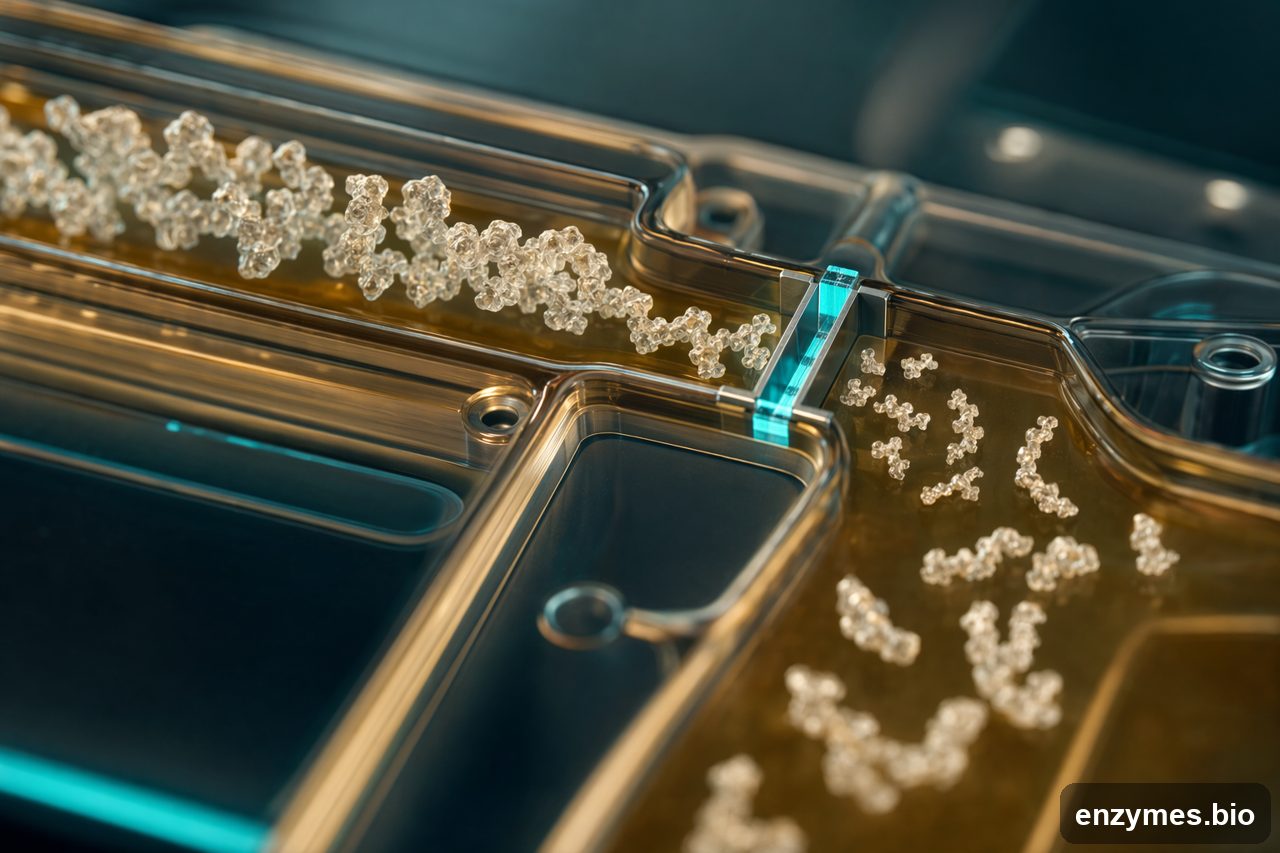
Brewing proteins are not a single problem. Some support foam, body, and mouthfeel. Others contribute to turbidity, filtration drag, colloidal instability, or inconsistent wort handling. Neutral Protease helps by selectively reducing protein size under suitable process conditions, converting larger proteins into shorter peptide fractions.
Typical use cases include:
- Adjunct slurry treatment before main mashing
- High-adjunct brewing where protein modification is incomplete
- Alternative grain workflows using rice, corn, sorghum, millet, oats, or mixed cereals
- Wort handling programs focused on filterability and clarification support
- Protein-risk management in bright beer stability programs
- Specialty process trials where soluble nitrogen balance needs adjustment
It is not a universal correction step. In classic all-malt brewing with well-modified malt and strong foam requirements, overuse may reduce body or foam persistence. The value is highest when the process has a defined protein-management objective.
Where neutral protease sits among brewhouse enzymes
A brewhouse rarely runs on one added enzyme. Kilning destroys much of the malt's own beta-glucanase, so brewers add beta-glucanase and xylanase to bring wort viscosity down, speed up lautering and filtration, raise extract and cut grain use; where unpasteurised beer is membrane-filtered, lower viscosity also extends membrane life. Heat-stable alpha-amylase liquefies adjunct starch, and glucoamylase raises fermentability. Neutral protease is the protein step in that set: it works on malt and adjunct protein, mostly in adjunct and cereal slurries before the main mash.
Chill haze is a different job. The protease used against chill haze cuts only next to proline, so haze-forming proteins can no longer bind polyphenols, while foam and taste are kept. That is a different enzyme from neutral protease. If chill haze is your problem, say so in your inquiry so we can tell you whether neutral protease fits at all.
Tell us which of these enzymes you already use, so the neutral protease dose and timing fit around them.

Why Neutral pH Activity Matters
Neutral Protease is most relevant where the process environment is near neutral or only moderately acidic. This makes it especially useful in adjunct preparation, cereal slurry conditioning, and selected upstream protein-adjustment steps before the grist moves fully into standard mash conditions.
For brewing teams, this creates a practical advantage: protein modification can be handled earlier and more predictably, instead of forcing the main mash or downstream clarification stage to do all the work.
Application Benefits
When matched to the right workflow, Neutral Protease can support:
More consistent wort handling
Partial hydrolysis of large protein fractions can reduce process variability linked to grist changes, adjunct composition, or seasonal malt differences.
Improved filtration support
By reducing the burden of haze-active or high-molecular-weight protein fractions, Neutral Protease may improve filter loading behavior and reduce clarification stress.
Adjunct protein management
In adjunct-heavy production, proteins may be less modified than in malt-based systems. Controlled treatment can improve downstream processing and help normalize wort properties.
Clarity-related process goals
Neutral Protease may support clarity programs by reducing protein fractions that interact with polyphenols and contribute to colloidal instability. It should be validated alongside existing stabilization tools rather than assumed to replace them.
Better process repeatability
A controlled enzyme step gives production teams another adjustable parameter when raw-material protein varies lot to lot.
Process Design Considerations
Neutral Protease performance depends on contact time, pH, temperature, substrate accessibility, and the point of addition. The best results come from treating the enzyme step as a controlled unit operation rather than a casual additive.
Key process variables to define during trials:
- Addition point: adjunct slurry, cereal cooker outlet, pre-mash conditioning, or selected wort-side step
- pH window: near-neutral treatment conditions generally provide the most practical fit
- Temperature exposure: enough warmth for catalytic activity, without excessive thermal stress
- Contact time: sufficient for the target protein change, but limited to avoid over-hydrolysis
- Mixing quality: even dispersion is essential for predictable results
- Deactivation plan: confirm where normal process heat or downstream conditions stop activity
Dosage Guidance for Brewery Trials
Neutral Protease Solutions recommends starting with a conservative screening program rather than a single fixed dose. The correct use rate depends on grist protein, adjunct load, process time, and the degree of hydrolysis required.
A practical trial structure:
- Establish an untreated control using the same malt, adjunct, and process conditions.
- Test a low, medium, and high enzyme addition across otherwise identical lab or pilot brews.
- Track wort clarity, filtration behavior, soluble nitrogen balance, haze risk, sensory impact, and foam performance.
- Select the lowest addition that achieves the desired handling or clarity benefit.
- Confirm the result at pilot or production scale before routine use.
Avoid chasing maximum hydrolysis. In brewing, the best dose is usually the one that solves the processing problem while preserving beer character.
Compatibility with Brewing Operations
Neutral Protease can be evaluated alongside common brewing process aids, but compatibility should be confirmed in the actual recipe and process sequence. Materials that strongly shift pH, bind proteins, or alter thermal exposure may change enzyme response.
For high-throughput breweries, the most practical implementation is often a defined dosing point with controlled mixing and documented hold time. For craft and specialty producers, bench trials can quickly show whether the enzyme supports the intended beer style or creates unwanted thinning, foam loss, or flavor shifts.
Ordering for production
We supply neutral protease in bulk to breweries, malt and adjunct processors, and brewing-supply distributors. Tell us the end use and the destination market, and we tell you which documents are available for that grade. Pack sizes, prices and lead times are quoted per order.
Storage and Handling
Store Neutral Protease according to the product specification and keep containers sealed when not in use. Avoid unnecessary exposure to heat, moisture, and repeated open-container handling. In production, use dedicated dosing procedures and prevent dusting or splashing depending on the supplied format.
As with all enzyme products, personnel should follow site safety procedures and avoid inhalation or direct contact with concentrates.
When to Use Neutral Protease in Brewing
Consider Neutral Protease when your brewery is facing:
- Variable malt or adjunct protein behavior
- Slower-than-expected lautering or filtration linked to protein load
- Protein-driven haze pressure
- High-adjunct formulations with incomplete protein modification
- Alternative grain beers requiring more predictable wort handling
- A need to adjust upstream protein fractions without aggressive downstream correction
Do not use it blindly in foam-critical beers. Validate foam retention, body, flavor, and clarity before adopting routine dosing.
Technical Fit Checklist
Neutral Protease is a good candidate if your team can answer yes to most of the following:
- The process has a defined protein-management objective.
- There is a controlled addition point with adequate mixing.
- The pH and temperature profile allows meaningful enzyme activity.
- Contact time can be recorded and repeated.
- Foam, body, filtration, and clarity will be measured during trials.
- Production can deactivate or remove residual activity through normal process design.
Request a Quote or Technical Review
Planning a brewing trial or a production change? We reply with the grade that fits and a price for your quantity.
Send us:
- the beer style and your grist (malt share and adjuncts)
- your mash schedule and batch size
- the problem to solve: wort handling, filtration or a protein target
- the quantity per order or per month
- the delivery country
Prices, pack sizes and lead times are quoted per order.